Before we start, this education system is my work, produced from testing students in real classrooms and devoid of academic studies; it’s just my lived experience and some common sense. Since I’m not an academic, I don’t plan to publish my work, but I have no problem with academics evaluating my thoughts. I still have to copyright my work. Copyright © 2025 Khor Atheliem. All rights reserved.
THE PROBLEM
I made this discovery in 2015 while instructing young ESL learners in English phonics. Students occasionally struggled with word memory, reading, speaking, and incorporating phonics sounds or blends.
I discovered that even after pupils had learned words or phonics blends, they were still having trouble remembering the material, which was causing a mental feedback loop.
I’ll be the first to acknowledge that I have no expertise in psychology or child psychology, but I spent all my junior school years surrounded by kids who had severe behavioural problems, learning disabilities, and psychological disorders.
As a result, when I engage with people, I have a sense of awareness more than the typical individual. I can detect certain things and determine whether someone is attempting to conceal anything.
I noticed that some young Chinese pupils would obviously be thinking in their “Chinese Mind,” which is their mother tongue. Where they couldn’t access what they were attempting to remember, or the information was lost elsewhere in their thoughts. This was creating some kind of blockage or feedback loop; in extreme cases, I was seeing rapid eye movement as a physical indicator that this was happening.
There were particular problems with young Chinese learners utilizing ESL materials, in addition to memory recall problems.
There were no products back then to assist teachers in dealing with Chinese pupils who pronounced English words in Pinyin or Chinese phonics. The absence of syllable markers on words was the last problem with the products at the time in China. This meant that Chinese pupils were pronouncing words in a behaviour I called 拖音” voice dragging,”
THE SOLUTION
I was aware of a few body hacks, switching off discomfort or distracting the brain. For example, people may experience “brain freeze” while eating anything cold. Pressing your tongue against the roof of your mouth can rapidly turn off this irritation.
So I wanted to seek a solution to fix this problem by retraining their brain to switch gears and break the feedback loop.
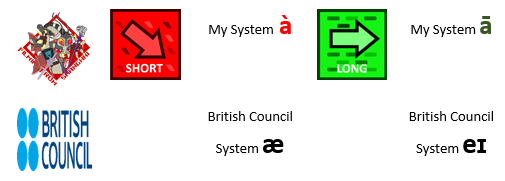
I created a method I call “Phonic Cut Method” that uses a combination of tailor-made colour-coded visual charts, speaking, and physical motions to redirect the user’s mind. For the Chinese young learner, integrating pinyin tone symbols makes the learning experience familiar, reminding a learner what letters have a long or short sound.
THE BUILDING BLOCKS
The development of my system was mostly unaffected by outside factors.
It is based on my grandmother’s approach to teaching me English phonics. In the 1980s, the British education system abandoned phonics in favour of the “look and say” method, which severely hindered the learning of many young people, including myself.
I would have benefited much if I could go back forty years and tell my younger self about this. In order to assist young people in learning English as a second language, I, a person who had severe learning difficulties, created this method.
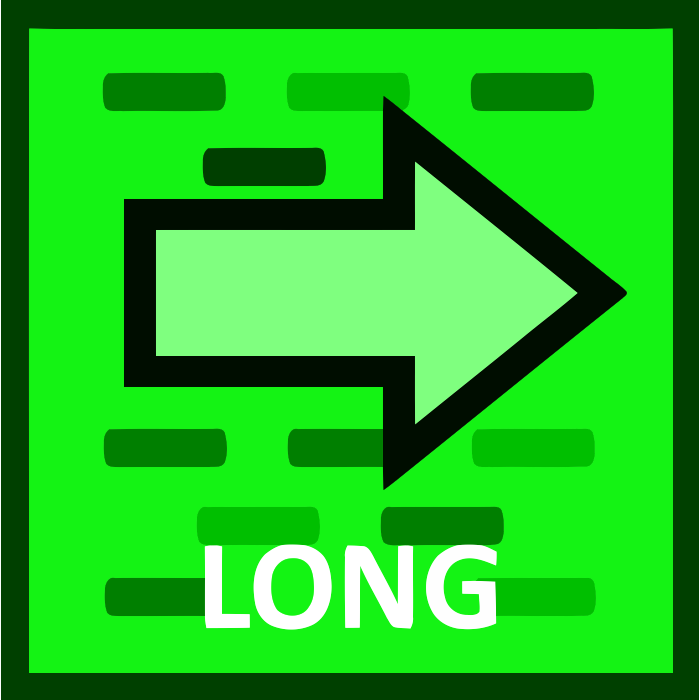

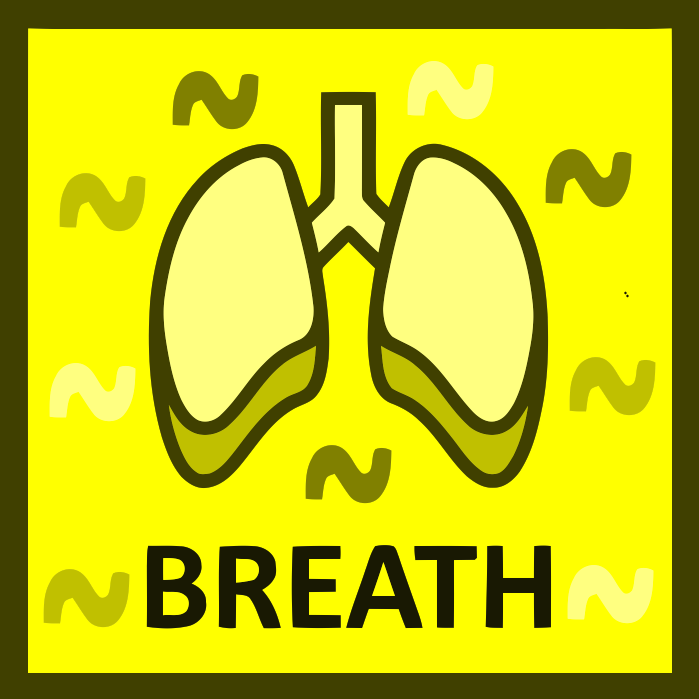

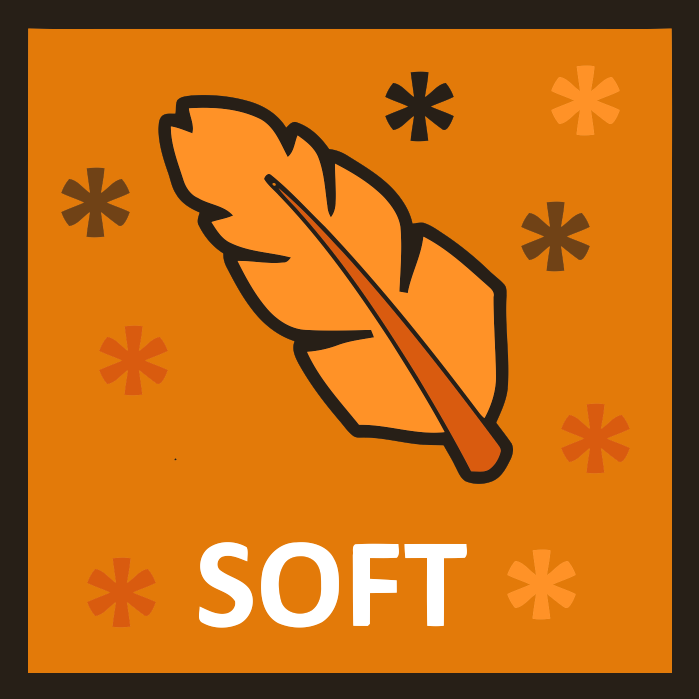
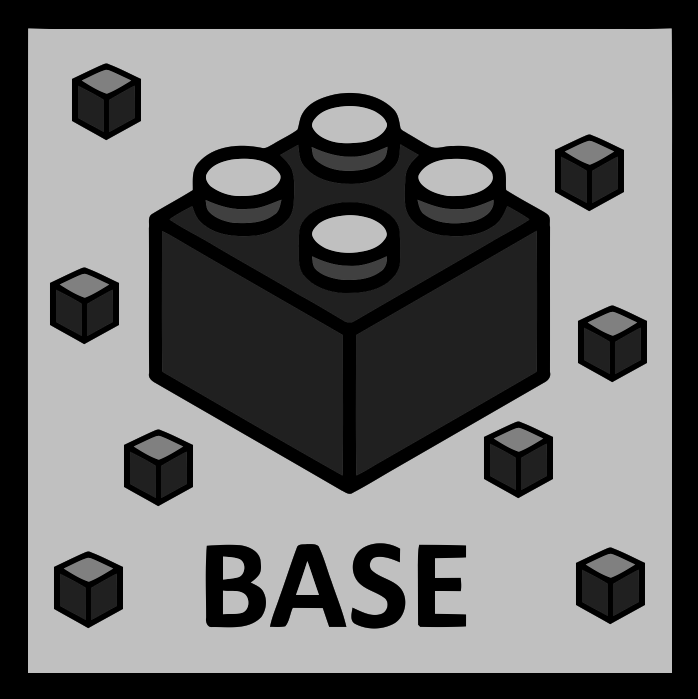
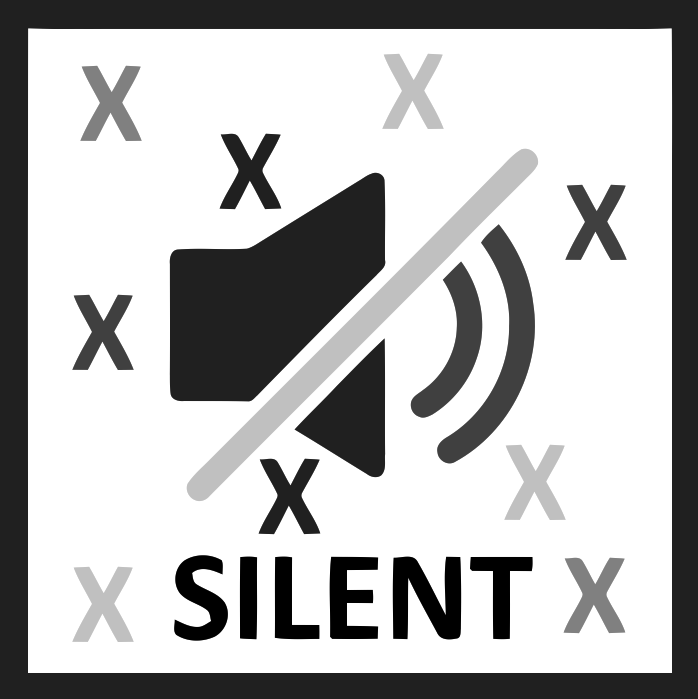
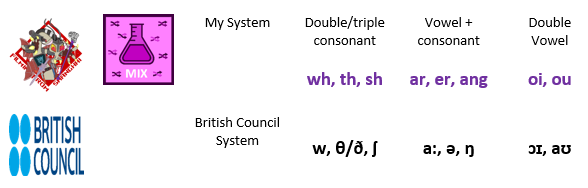
My system has 8 categories, and our combinations are based on the nature of the letters or combos or their sounds.
VOWEL SOUNDS
Two categories of single and double vowels: short and long sounds. Integrating Chinese pinyin characteristics to help learners and parents distinguish the differences.
BREATHING SOUNDS
While young Chinese learners are learning their own native language, or come into contact with pinyin. They will tend to pronounce the following letters in pinyin, instead of the English sounds. h=her, p=per, t=ter. So by adjusting the way the sound is said, focusing on breathing, the sound greatly decreases this mistake in Chinese learners.

BASE CONSONANTS
We call single consonants that are not breathing sounds base consonants. These are the building blocks of words. They are all the same in all systems. In our system, Yy is considered a false vowel & only a base consonant at the start of a word.

REGULAR BLENDS
These are blends of consonants that still keep their own sound while transitioning into another consonant that also keeps its own sound.

IRREGULAR BLENDS
These are blends that do not keep their own sound. While transitioning or completely change in combination with other letters.
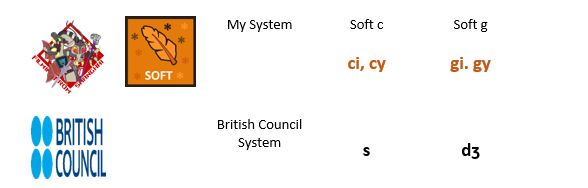
SOFT BLENDS
Simply the combination of letters that turn a hard c or g sound into a soft sound.
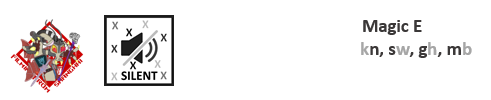
SILENT LETTERS
These are blends of consonants that still keep their own sound while transitioning into another consonant that also keeps its own sound.
VISUAL CUT FLASHCARD CONCEPT DESIGN.
This is my prototype flashcard design, and it has each letter in the category colors. The way the word is cut is above, below, displays the blocks & the number of syllables, and is marked by a Chinese drum.
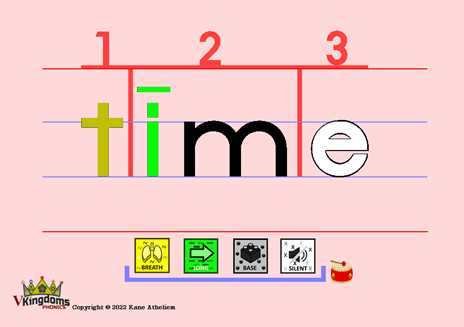
VISUAL CUT FEATURE EXPLAINED.
We will use the word “time” for an example from my prototype flashcard.
Section 1 has 1 letter “t” yellow font represents a breathing sound
Section 2 has a blend of “im”. The “i” green font represents a long sound. The “m” black font represents a base sound.
Section 3 has a Magic E. White font represents no sound.
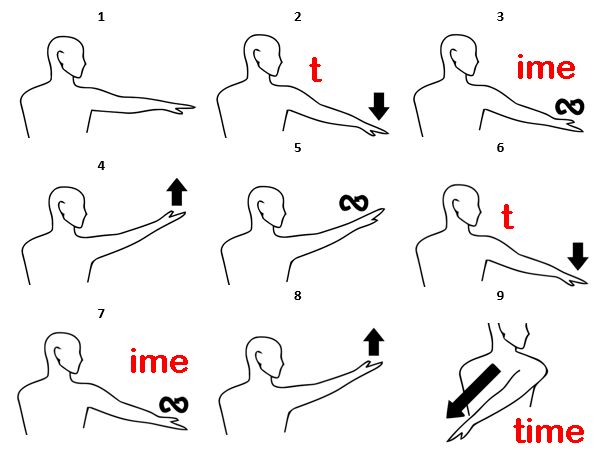
During “spell casting,” each phonic sound/blend. The hand moves up, then down, on each spoken phonic sound/blend.
WORD CASTING
What is the purpose of this casting and cutting, then? I discovered a hack when children became caught in a loop. To get over such obstacles, they can use kinetic learning and visual aids to shift their focus or their brain into a different mode. So, where was the influence of casting words? It originated from viewing the television series Nightmare in the 1980s. Competitors would need to sometimes spell words in a dungeon to handle various circumstances. When my grandmother noticed that I liked it, she had me use a pencil like a sword or a wand and had me cast words in a similar way. As a side note, I was nearly on that TV show. Our team received an official acceptance letter, but we were unable to make the three-hour drive to the Anglia Television studios in Norwich, where I was going to appear as a dungeoneer.
THE REALITY
The system functioned, but due to time restrictions and a change in the law, I was unable to fulfill my aspirations of creating my own educational books. I did manage to almost complete my 1st book, and even mapped out a six-level product line.
Why didn’t I finish this project?
1) I was able to utilize any product and add my own method on top; it wasn’t perfect, but it did fix student issues.
2) My daughter was born.
3) China implemented the Double Reduction Policy in 2021.
It is not worth the trouble to teach or make English teaching products in China.
The policy’s goal was to lessen parents’ financial burden because the majority of training institutions were now more focused on profit than instruction. I made my lessons inexpensive for even poor parents since I wasn’t self-centered. Additionally, unlike training centers that cram more than 14 students into a classroom like sardines, I had a cap of no more than 8 pupils in one class. By prohibiting for-profit tutoring, it essentially killed English education options from anywhere but the students’ main schools. Its objectives were to reduce family schooling expenses and ease student stress.
Speaking from the perspective of a parent of a Chinese child rather than a teacher, what transpired was that parents either sought black-market training facilities or just transferred that money to other courses or hobbies.
Because local restaurants and retail establishments had a mutually beneficial connection with these centers, their closure also had a detrimental impact on the local economy. These centers provided many young people with employment options in and around their locations. These opportunities dried up as a result of this policy’s implementation. Yes, I believed that the government had to deal with some of these training facilities because they had gotten out of hand and were more concerned with earning money than with educating the children. However, like many governments, I sometimes get the impression that certain choices aren’t always thought through. A choice is like a game of chess to me. One action will have an impact on other things. Many of these training facilities had very bad intentions. Pyramid schemes, tax evasion, embezzlement of funds, and recruiting illegal or dangerous foreign workers. Therefore, I don’t blame the Chinese government for having to shut them down, but it would have been a better decision if there had been a way to control things to make a fair, free-market option available to everyone. Make it more about educating children than lining the pockets of people who should have never been allowed near the education of children.
The true villain in this story is the students’ main schools themselves. Children continue to attend school till nine o’clock at night, Monday to Friday. Forced to complete ridiculous levels of assignments, increasing parental stress, and harming the health of the family. Most of my marital arguments over the past few years have been around my daughter’s school. They assign her needless & pointless homework. We are lucky if we get Sunday evenings for family time due to her school workload.